
Panel on the European Act on Media Freedom held in Niš
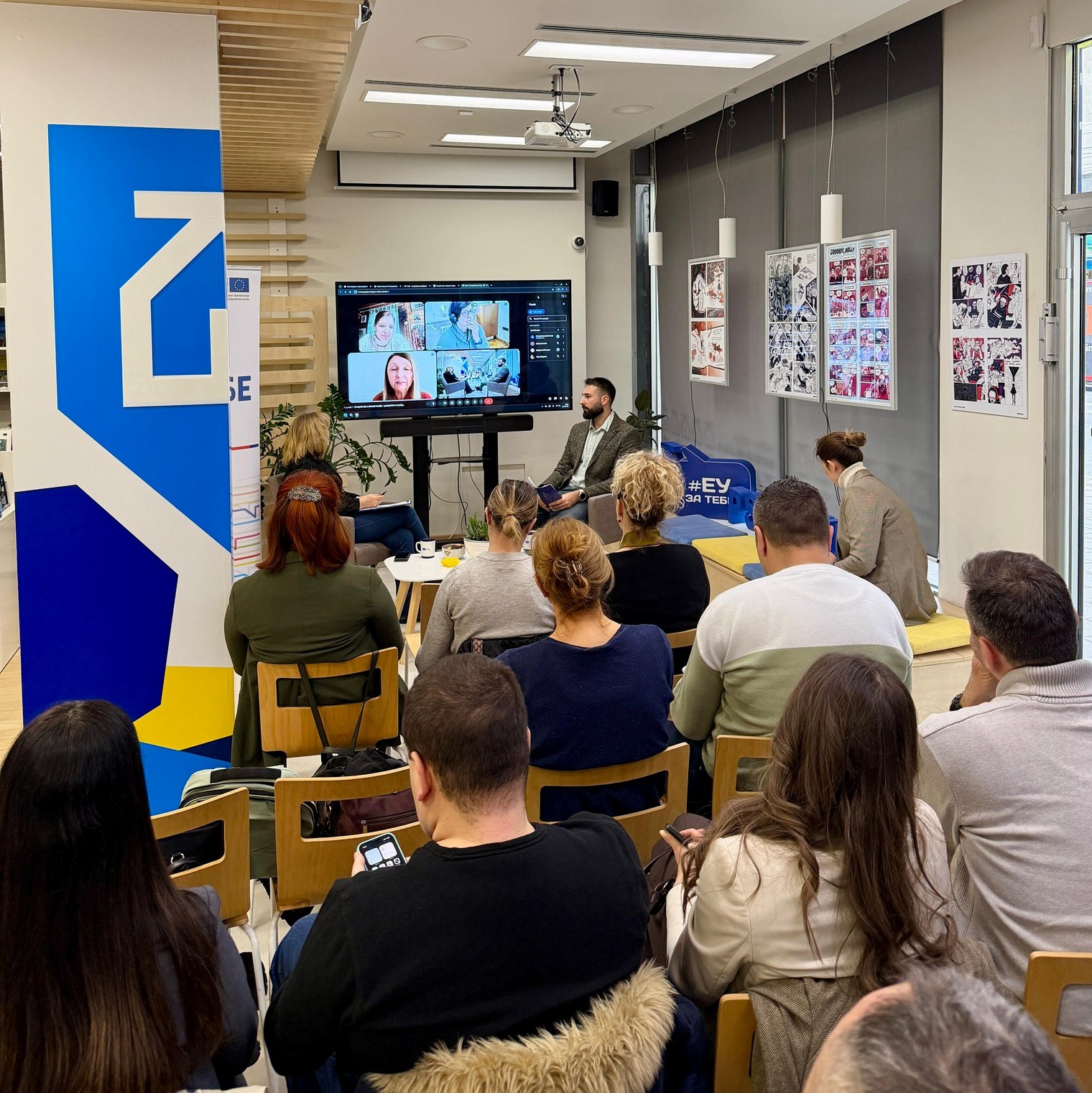
The European Media Freedom Act is the first comprehensive act that can provide a good basis for the protection of pluralism and media independence on the Old Continent, but it is still too early to assess what its scope will be, media experts said at a a panel held at the European House in Niš on 21 January.
The panel discussion "European Media Freedom Act - Perspectives and Significance for Candidate Countries" brought together academic media law experts and representatives of media associations. It was organised in cooperation between the Pulse of Europe project - media trips to EU and the European House in Niš, and mainly for media professionals, students and professors of the Department of Media and Communications of the Faculty of Philosophy in Nis that were in the audience.
The European Media Freedom Act (EMFA) can be considered revolutionary, because it is the first time that the European Union has adopted a regulatory initiative that will legally regulate the process of digital transformation, said retired professor Snježana Milivojević. The Act jointly regulates the field of media and is applied directly, without state interference, on the entire territory of the EU. She reminded that EMFA replaces the Directive on audiovisual media services that existed until then, but that it now also regulates large digital platforms. A complete regulatory framework for the digital world is being built, because the Act on Digital Services, the Act on the Digital Market, and the Act on Artificial Intelligence were adopted in the past two years. This is an attempt to ensure that large online platforms and small websites have equal conditions on the market of digital services, to prevent the malignant influence of disinformation or the offer of "fake services", and to guarantee the freedoms and human rights of users, Milivojević said.

Assistant Professor of the Faculty of Philosophy in Niš, Andrej Blagojević, presented the most important parts of the Media Freedom Act, the first part of which is the protection of editorial independence and the protection of journalistic sources, including against the use of spyware. The second major segment represents ensuring the independent functioning of public services and how to improve the transparency of media ownership, while the third relates to arrangements for publishing media contents on large online platforms.
The Secretary General of the Croatian Journalists' Association, Melissa Skender, said that as a member of the EU, Croatia is obliged to implement the European Act on Media Freedom, but that it is late in doing so. She added that a public debate on the law on the application of EMFA is underway instead of the reform of media laws that is necessary. Skender also said that information on media ownership has been published recently in the country.
Tijana Blagojev, researcher at the Center for Media Pluralism and Media Freedom, presented the results of the "EMFA and local media" research. She pointed out that the obligations that apply to all media service providers also apply to local media. This includes the publication of data on ownership, the amount of public funds received for state advertising as well as the total annual amount of advertising revenue from state bodies/entities from non-EU countries. Media service providers should adopt internal protective mechanisms (internal rules, codes, editorial guidelines) in order to guarantee the independence of editorial decisions, Blagojev said.